Supermarine Spitfire Mk I‑A N3200
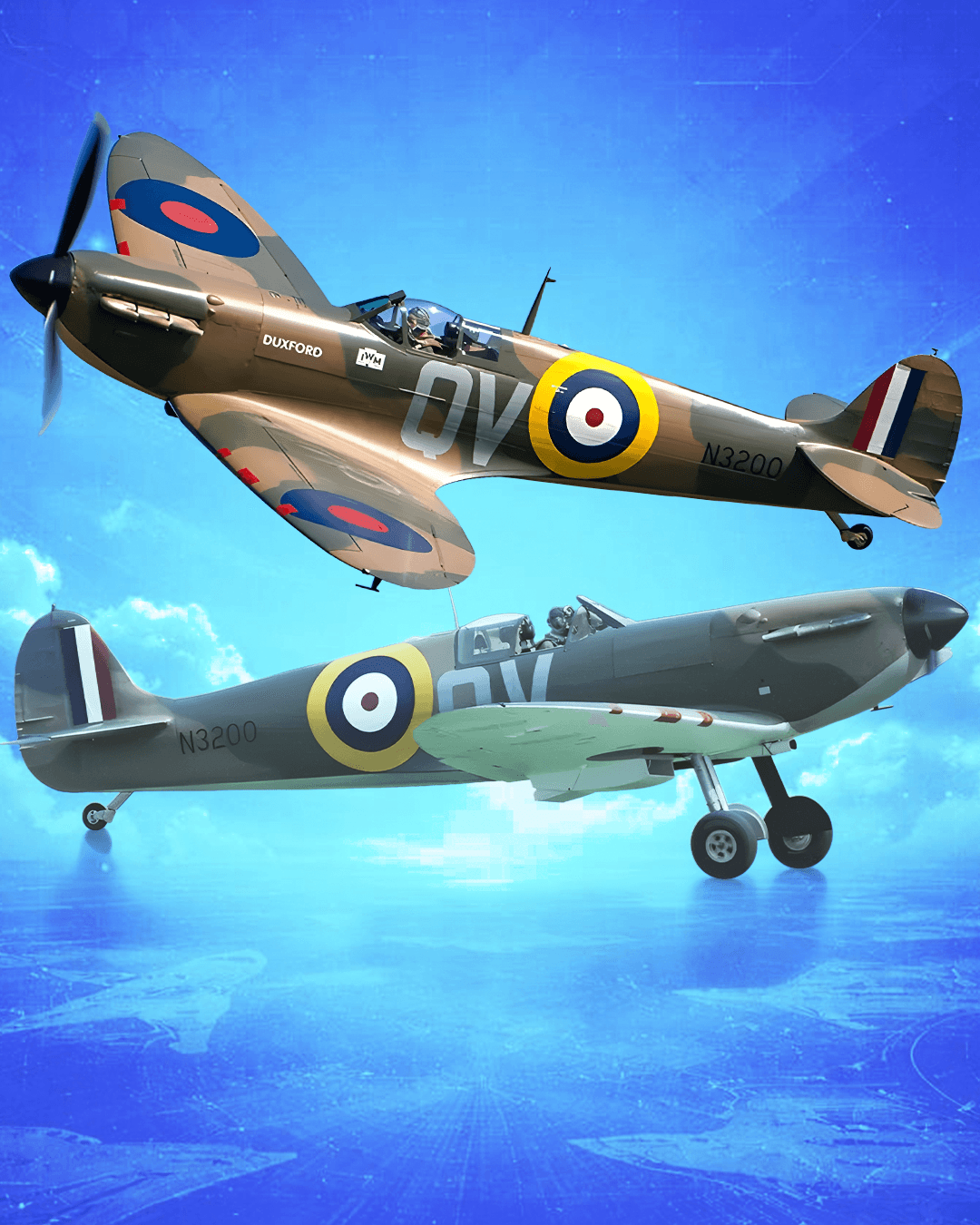
Supermarine Spitfire Mk I‑A N3200 (G‑CFGJ)
A Battle of Britain Original - and Perhaps the Most Authentic Flying Spitfire in the World
The Supermarine Spitfire Mk I‑A N3200 (G‑CFGJ) is widely regarded as one of the most historically significant and authentic airworthy Spitfires anywhere in the world today. A genuine Battle of Britain veteran and an exceptionally early example of R.J. Mitchell’s revolutionary fighter, N3200 is not simply preserved history – it is living, flying heritage.
Now cleared to display at Headcorn International Airshow 2026, the largest aerodrome airshow in London and the South East, this remarkable aircraft represents a once‑in‑a‑generation opportunity to see an original 1940 Spitfire flying exactly as it did during the darkest days of the Second World War.
The First of a Legend
The Spitfire Mk I was the first production variant of Mitchell’s original design, developed from the prototype that first flew from Eastleigh (now Southampton Airport) on 5 March 1936. Early production Spitfires began arriving at frontline RAF squadrons from 1938, with Duxford becoming one of the type’s most important early operational bases.
As an early Mk I‑A, N3200 lacks many features that would later be introduced as wartime experience drove rapid modification. Yet despite its comparatively simple specification, the Spitfire Mk I proved devastatingly effective in the opening phases of the war and became an enduring symbol of Britain’s resistance in 1940.
Operational History – Dunkirk and Beyond
N3200 first flew on 29 November 1939, also from Eastleigh, before being delivered to No. 8 Maintenance Unit at RAF Little Rissington for acceptance and preparation. On 19 April 1940, the aircraft was issued to No. 19 Squadron at RAF Duxford, one of the RAF’s pioneering Spitfire units, carrying the squadron code QV.
Just five weeks later, on 26 May 1940, during operations covering the evacuation of British forces from Dunkirk, Squadron Leader Geoffrey Stephenson, the squadron’s commanding officer, was flying N3200 over northern France. During the sortie he successfully shot down a Junkers Ju 87 Stuka, but the Spitfire was subsequently hit in the radiator and forced to make a controlled ditching on Sangatte Beach.
Stephenson survived and was taken prisoner. After multiple escape attempts, he was eventually held at Colditz Castle, surviving the war. Period photographs show that N3200 remained largely intact after the landing and became something of a curiosity for occupying German troops, many of whom posed with the downed aircraft.
Buried in the Sands
The tides and shifting sands of the French coast gradually buried the Spitfire completely. N3200 lay hidden beneath Sangatte beach for over four decades, until its recovery in 1986. The aircraft was displayed locally for several years before being acquired in 2000 by Mark One Partners, who placed it into long‑term storage pending a decision on its future.
One of the Most Ambitious Spitfire Restorations Ever Attempted
The recovered airframe arrived at Duxford in 2007, and in 2012 work began on what would become one of the most meticulous and ambitious Spitfire restorations ever undertaken. Working alongside another early Mark I project, the Aircraft Restoration Company was tasked with an extraordinary brief: to return N3200 to flight exactly as it appeared on its final combat sortie on 26 May 1940.
This required an immense research effort. Wartime drawings alone were insufficient, as early Spitfires were being continuously modified in service as lessons were learned in combat. Wherever possible, original components were salvaged and reused, despite the severe effects of sand and saltwater corrosion.
The result is a Spitfire restored with an extraordinary level of authenticity, featuring period‑correct details unique to the Mk I, including:
Early‑pattern Dunlop tyres
Hand‑operated undercarriage pump
Correct canopy configuration
Metal propeller
Early undercarriage position indicators
These and hundreds of other subtle details distinguish N3200 from later Spitfire marks and even from other restored examples.
Return to the Skies
Now registered as G‑CFGJ, N3200 made its first post‑restoration flight from Duxford in early 2014, flown by John Romain. Following a successful test programme, the aircraft appeared at select events during the 2014 season.
In 2015, marking 75 years since the aircraft was shot down, Thomas Kaplan of Mark One Partners donated N3200 to the Imperial War Museum, with the express wish that it should remain based at Duxford and continue flying. The handover ceremony took place in July 2015 and was attended by Prince William, who signed the inside of the cockpit door to mark the occasion.
Today, the aircraft remains under the ownership of the Imperial War Museum and is displayed both at Duxford and at selected events across the UK.
A One‑of‑a‑Kind Flying Time Capsule
With its distinctive whistle, early‑war configuration and black‑and‑white underside, N3200 is instantly recognisable and utterly unique. Restored to represent one specific day in 1940 with extraordinary fidelity, it is widely considered perhaps the most authentic airworthy Spitfire in existence.
For an aircraft of such national importance to continue flying - and to appear at major public events - is a rare privilege. Its appearance at Headcorn International Airshow 2026 offers audiences a chance to witness not just a Spitfire, but a direct, living connection to the Battle of Britain.
And yes - it’s an absolute belter.
See Spitfire Mk I‑A N3200 at Headcorn International Airshow 2026
Cleared to display at the largest aerodrome airshow in London and the South East, Supermarine Spitfire Mk I‑A N3200 (G‑CFGJ) will take to the skies at Headcorn International Airshow.
📅 27–28 June 2026
📍 Headcorn Aerodrome, Kent
Experience one of the rarest and most important flying aircraft in the world - exactly as it flew in 1940.
AIRSHOW TICKETS