Britain has a bold new airshow. It arrives this June with Spitfires, jets, a Thunderbolt coming home - and nowhere near enough hype.
SUMMER 2026 • KENT • WHAT'S ON
Britain has a bold new airshow. It arrives this June with Spitfires, jets, a Thunderbolt coming home - and nowhere near enough hype.
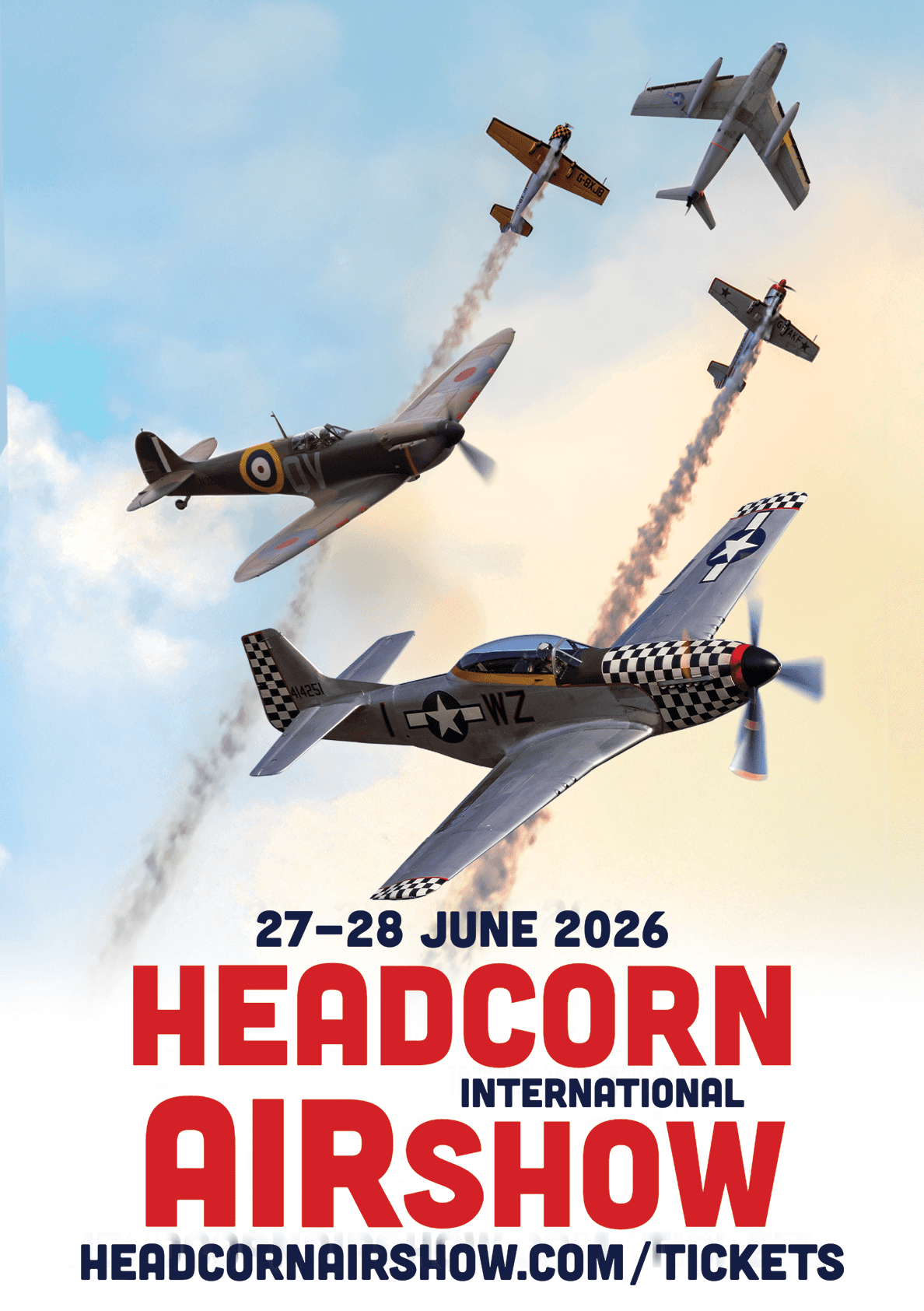
The inaugural Headcorn International Airshow has assembled, on a genuine wartime Kent airfield, a flying programme that most established events would envy. It is backed by IWM Duxford and Biggin Hill. It is here to stay. And right now, almost nobody knows about it.
Features | 27–28 June 2026 • Headcorn Aerodrome, Kent
There is a particular type of British summer afternoon that everyone knows instantly, even if no one has ever quite described it properly: long grass pressed flat by a warm wind, the distant crackle of a Merlin engine, a child pointing urgently at the sky. If that image means anything to you, clear the 27th and 28th of June and point yourself towards the Weald of Kent. Something worth knowing about is happening there, and it is happening for the first time.
Headcorn Aerodrome sits between Maidstone and Ashford - quiet and unassuming, in the way that places carrying a great deal of history often are. In 1944, it was RAF Lashenden: a forward fighter base for USAAF Thunderbolt units pressing into occupied Europe. The grass runways are still there. The hedgerows are still there. This summer, for two days in late June, it becomes the site of the inaugural Headcorn International Airshow - and if the programme they have assembled is anything to go by, the word "inaugural" will soon start to feel inadequate.
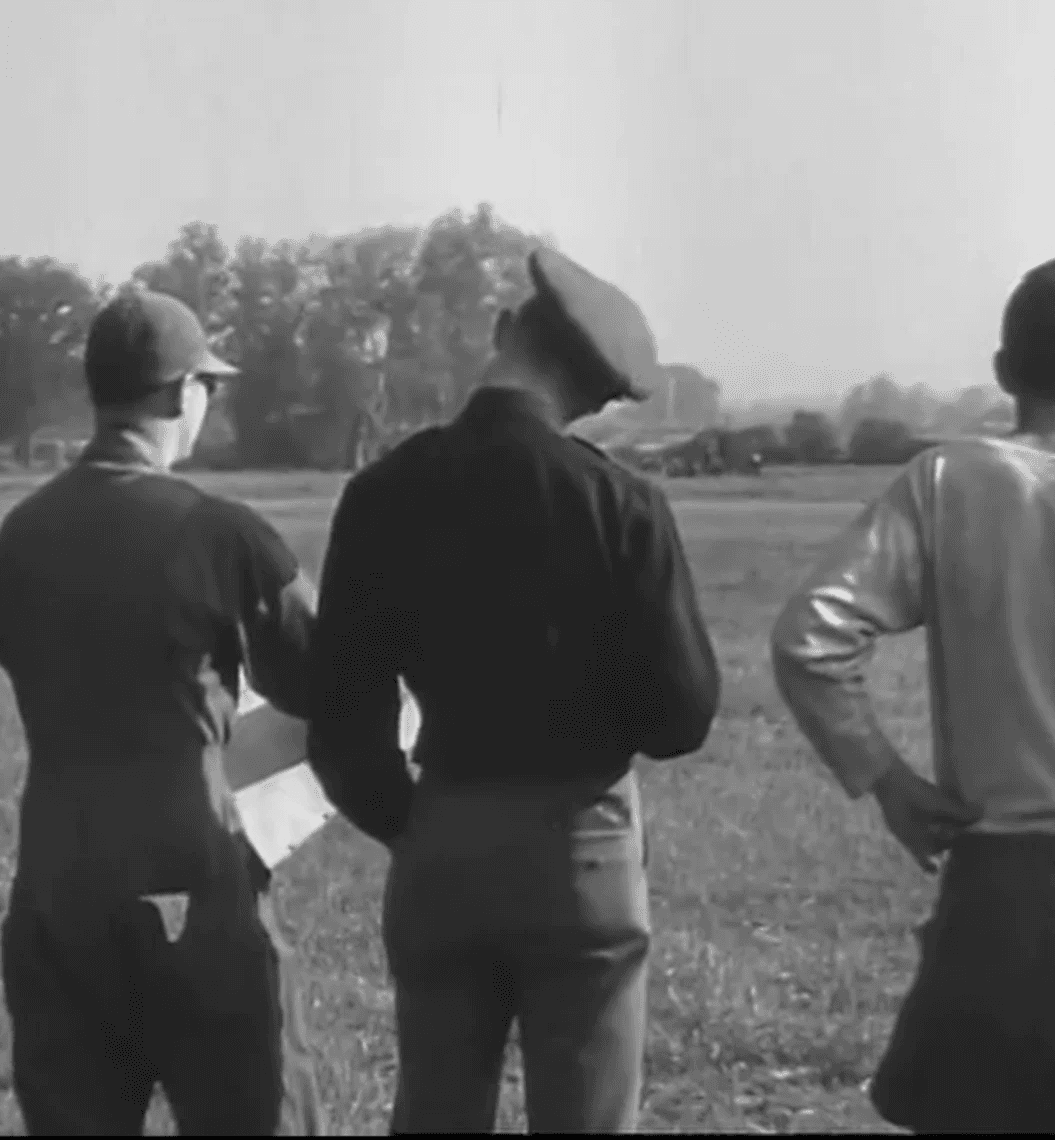
Officers in 1944 at Headcorn (formerly RAF Lashenden).
"Despite the international name, this airshow will maintain the local and intimate atmosphere so widely loved at the aerodrome - breathing new life into a much-loved, classic WWII airfield."
THE WARBIRDS
Let us start with the Spitfires, because there are several and each one earns its place differently. Spitfire Mk I-A N3200 is a genuine Battle of Britain veteran - flown operationally in 1940 and preserved now as one of the most historically significant surviving examples in the world. The RAF's Battle of Britain Memorial Flight brings its own Spitfire and Hurricane in the full ceremonial weight of that institution. Then there is TA805 - 'Spirit of Kent' - a Mk IX born at Castle Bromwich in the closing months of the war, flown with 234 Squadron under ace Roland 'Bee' Beamont, and restored over more than a decade before returning to flight in December 2005. Three Spitfires. Not one of them is filler.
Navy Wings bring SX336 - a Seafire XVII and the only airworthy example of its mark in the world. Built by Westland at Yeovil in 1946, powered by a Rolls-Royce Griffon and armed for carrier combat, it flew with 767 Naval Air Squadron at RNAS Yeovilton and wears those markings still. A Hawker Hurricane that flew with 253 Squadron during the summer of 1940. A P-51D Mustang in the markings of triple ace William T. Whisner. Navy Wings' Swordfish Mk I - the "Stringbag," the aircraft that crippled the Italian fleet at Taranto, now a rare and affecting sight over any airfield. And the P-47 Thunderbolt: the barrel-chested American fighter that spent 1944 at this exact airfield under USAAF colours, returning to Headcorn's grass this June for the first time in eighty-two years. That is not a recreation. It is a homecoming.
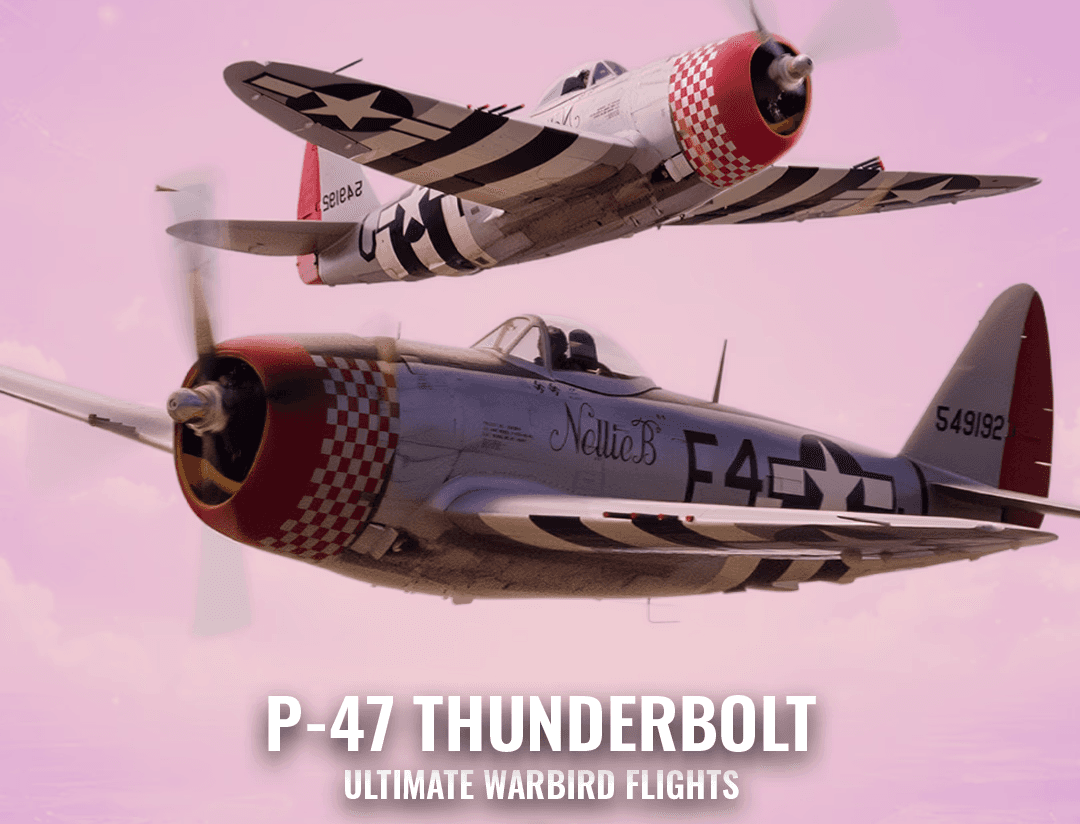
Official release poster for the P47 Thunderbolt coming in June ‘Nellie B’.
THE JETS
Any airshow can fill a flying programme with Spitfires and claim historical depth. What separates serious events from memorable ones is range - the ability to take an audience from the propeller age to the jet age in a single afternoon without it feeling forced. Headcorn manages this with unusual confidence for a first edition.
The Norwegian Historical Squadron arrives from Scandinavia with their de Havilland Vampire - one of the first operational jet fighters, which served with the Royal Norwegian Air Force from 1948 through the early Cold War, and whose distinctive twin-boom design and centrifugal engine make it one of the most visually striking aircraft to ever grace an airshow circuit. Its graceful, almost eerie handling at low level is quite unlike anything a piston-engined warbird can offer, and its presence at Headcorn tells you something about the calibre of the international relationships the organizers have built for a debut event.
Then there is the F-86 Sabre from Mistral Warbirds. Famous for its role in the Korean War - the swept-wing counterpart to the MiG-15, the aircraft that defined the first generation of jet combat - it remains one of the most recognisable Cold War fighters ever built. Flying examples are rare. Flying examples at intimate grass-runway airshows are rarer still. The crowd-level passes that are possible at Headcorn, on an aerodrome of this scale, are simply not replicable at coastal or military-base shows. The Sabre here will be an experience, not just a sighting.
From the Czech Republic comes an AH-1S Cobra - Bell's pioneering attack helicopter, the world's first dedicated gunship, wearing a shark-mouth paint scheme and carrying all the compressed menace of its Vietnam-era design. Set against the pastoral backdrop of the Kentish Weald and the morning's propeller aircraft, it will feel like an arrival from another world. Which, in a sense, it is.
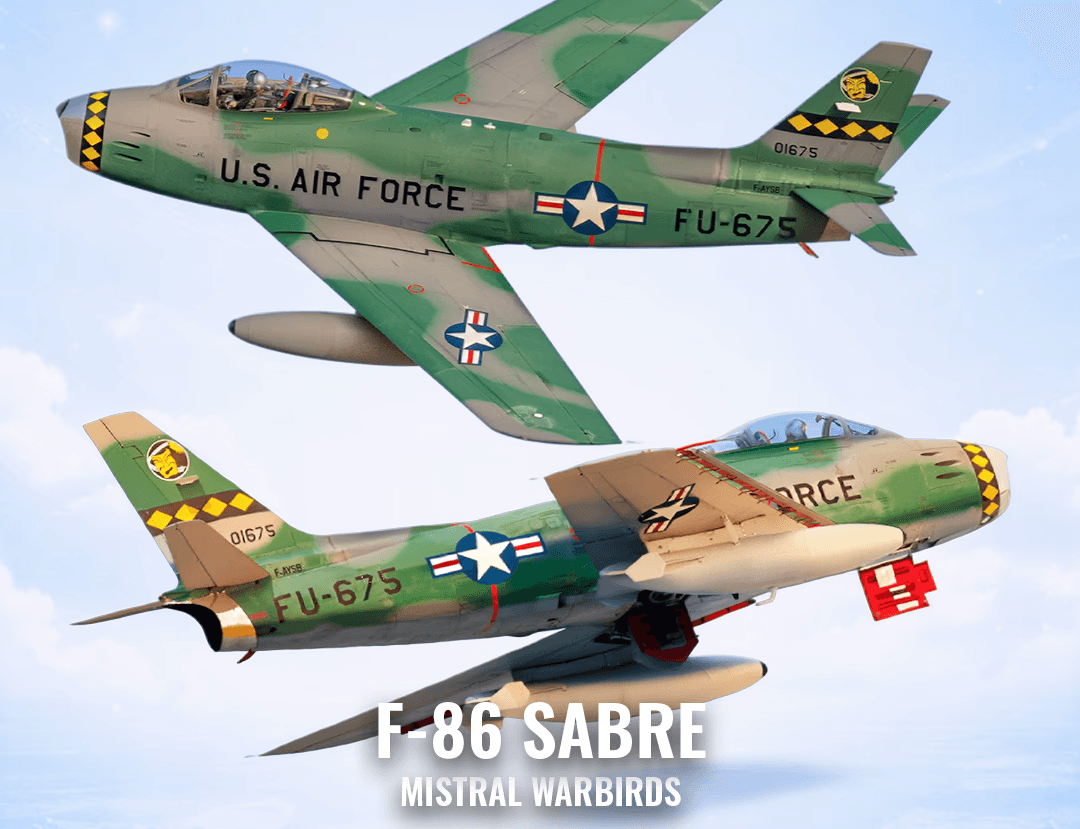
Official release poster for the F86 Sabre owned by Mistral Warbirds.
A SHOW OF DEPTH ON THE GROUND
The flying programme is the headline, but the ground show at Headcorn this year is built to be a full day out in its own right. More than thirty food and drink traders — international street food alongside local Kent produce — sit alongside fifty-plus exhibitors ranging from flight simulators and military hardware to educational aviation stands. Static exhibits run to over 150 aircraft and vehicles, with a large selection of Balaon military and civilian vehicles adding a dimension to the ground experience that most airshows simply do not bother with. International car exhibits and rare static aircraft are spread across the field, giving families somewhere to explore during the gaps between flying sequences rather than simply waiting for the next pass.
The Fokker D.VII — the only flying example in the United Kingdom, built by hand over fifteen years and wearing the personal markings of Great War ace Rudolf Stark — will be on display and in the air. Eleven confirmed kills. One very distinctive lilac cowling. The Flying Comrades bring Cold War precision in a Yak-18T and Yak-52 formation. NEBO Air's Electric Arrows — the world's first all-electric aerobatic display team — take to the sky as part of the show's HIA Green programme, placing the future of flight in genuine dialogue with its past. And there is The Last Dogfight: a reenactment of one of the closing aerial battles of the Second World War, staged over an airfield that was itself part of that same war. It will land differently here than it would anywhere else.
BACKED TO LAST
First editions carry risk. Ambition outruns execution, audiences stay home and wait for year two, the programme looks thin against the promises. What makes Headcorn different — what makes it worth booking before you have seen a review, before the word has fully spread — is who is standing behind it.
The show carries the institutional support of IWM Duxford and Biggin Hill Airfield. These are not names that attach themselves lightly to untested events. They represent a statement of confidence in the organising team, and a commitment that this airshow is not a one-summer experiment. It is built to grow: to add to its programme, to deepen its international reach, to earn its reputation year by year while holding onto the intimate, grass-roots character of the aerodrome that makes it distinctive in the first place. The bones of something long-lasting are already visible in the first edition.
INSTITUTIONAL BACKING & PARTNERSHIPS
IWM Duxford - Biggin Hill Airfield - Navy Wings - Biggin Hill Heritage Hangar - Mistral Warbirds - Norwegian Historical Squadron
GIVING SOMETHING BACK
The Oddballs Foundation • The Big Cat Sanctuary
The evening before the main show opens — 26 June — Headcorn Aerodrome hosts Wings & Whiskers, a charity evening in support of The Big Cat Sanctuary. Across the full weekend, the show actively supports The Oddballs Foundation, which raises awareness of testicular cancer in a way that is approachable, human, and genuinely effective. These are not token badge partnerships. The organising team has placed charitable engagement at the centre of the event's identity from its first year. That matters.
WHY GO NOW
Britain's summer airshow calendar is not short of options. Fairford is vast. Duxford is Duxford. Eastbourne has the seafront. Each has its logic. Headcorn has something that none of them can replicate: the genuine article. A real wartime aerodrome, a programme that has no business being this complete in its first year, an intimate scale that puts you close to aircraft in a way the big coastal shows simply cannot, and an organising team backed by institutions that have decided this is worth their name.
The P-47 will fly over Headcorn on 27 June for the first time in eighty-two years. The only airworthy Seafire XVII in the world will be there. A Norwegian Vampire and a Czech Cobra will share airspace with a Swordfish, a 1940 Battle of Britain Spitfire, and the world's first electric aerobatic team. Former British Aerobatic Champions will perform over the grass. And somewhere on the ground, among the Balaon vehicles and the street food and the static Spitfires, a child will point at the sky.
Go this year. Before everyone else does.
Tickets and full programme at headcornairshow.com. Wings & Whiskers charity evening, 26 June. Main show 27–28 June 2026, Headcorn Aerodrome, Kent TN27 9HX.